4.15 | shattered mirrors

✉️ letter #80
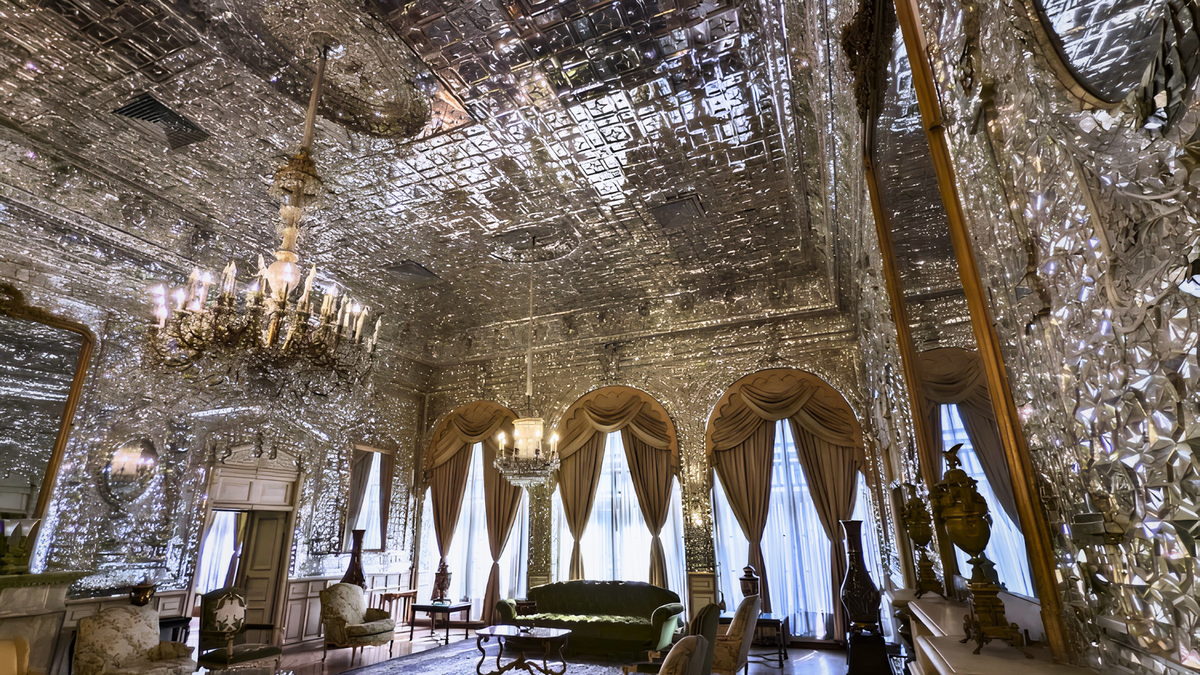
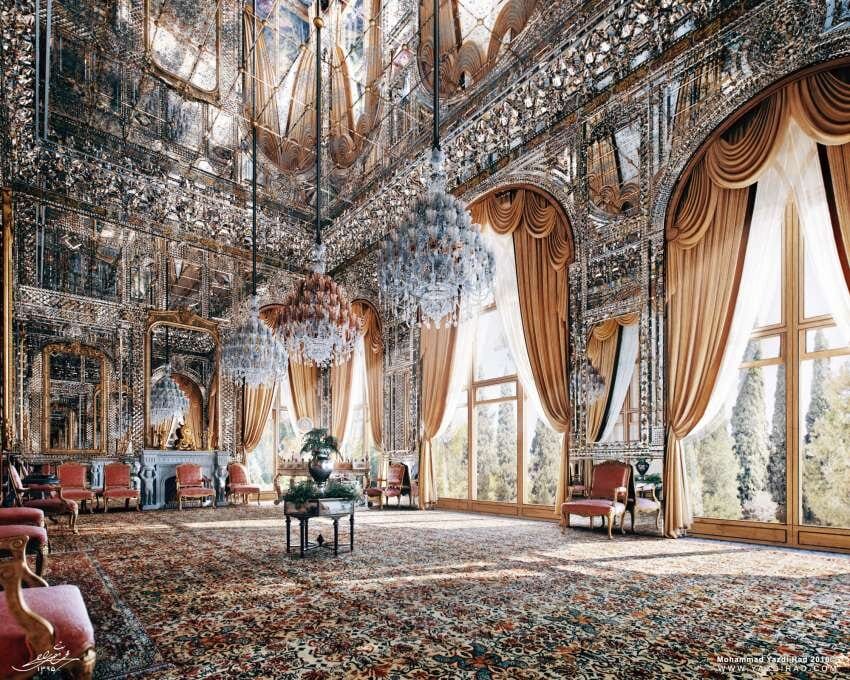
To compare the Golestan Palace to Versailles is to downplay the specific wonder it engenders. In the Mirror Hall (Talar-e Ayeneh), thousands of small, intricately designed mirrors line the walls and ceiling, reflecting each other to create a heavenly interplay of light and color. It is a mesmerizing illusion of a room that expands ever outward into infinity—a place where, when the chandeliers are lit, a warm glow seems to emanate from the very air itself.
The Palace was built in the 19th century, a time when the Qajar dynasty was first encountering the West through the birth of modern diplomacy and expedited travel. Like the rest of the complex, the Mirror Hall reflects that explosion of ideas in its "East meets West" aesthetic, blending traditional Persian ayeneh-kari (mirror-work) with European neoclassical sensibilities. Despite its structural delicacy, it survived over a century of turmoil—remaining a shimmering anchor for Tehran through revolutions and regional wars.
But the years have a way of dimming even the most brilliant luster. For the past decade, a massive restoration project had been underway to return the hall to its former glory. Experts worked painstakingly to rectify rising damp and mold, meticulously re-gluing individual mirror shards that had lost their silvering, and replacing century-old electrical wiring with fiber-optics to prevent heat damage. The work was officially finished in late February 2026. The restorers announced that the Talar-e Ayeneh was finally ready for its closeup.
It lasted less than a week.
🎼 the soundtrack | sauvignon blanc - rosalía
ROSALÍA's Lux album has just been repeat listening, but her latest single especially is all about being unafraid to pursue golden futures.
On March 2, shockwaves from airstrikes on Tehran’s nearby Arg Square reduced large parts of that painstakingly restored artwork to a mess of broken shards. As UNESCO reported that over 120 culturally significant sites across Iran have been damaged or threatened, they begged for the restraint to spare the “social foundation of societies.”
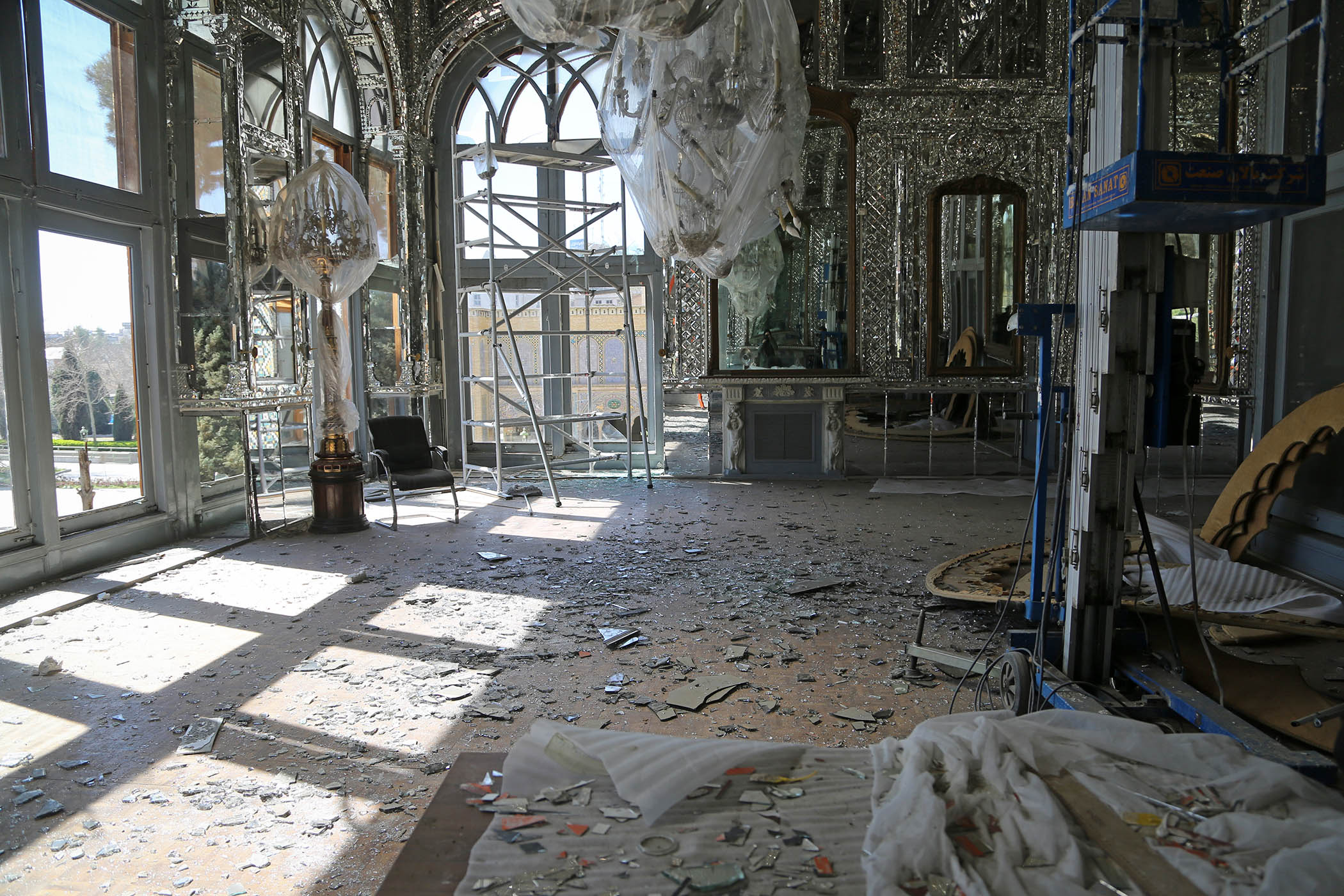
It may feel strange to mourn an architectural marvel in the midst of the more immediate agony of human life. The strike that shook Golestan happened just two days after a girl’s primary school was destroyed. In the week after the strike, the bombing of oil depots filled the skies with a toxic, oily black rain that will have lasting effects on millions. A month into this conflict, over 3,000 Iranians and 2,000 Lebanese people have been killed.
And it also may feel strange to mourn the impact of this conflict on climate, but the reality of that too is devastating. A recent analysis found that the first 14 days of this conflict alone released over 5 million tons of CO2—draining the global carbon budget faster than 84 countries combined. When we are already sprinting toward our 1.5°C warming boundary by 2040, this war represents a violent acceleration.
War doesn’t just destroy lives, it destroys heritage and history, and it destroys futures. Caring about the climate relies on our ability to care about what the next generation will inherit. When we destroy 400-year-old monuments, we are breaking the mental bridges between the past and the future. It is no coincidence that those willing to bomb a civilization “back to the stone age” are the same actors who systematically erase climate research and block international environmental laws.
It is now halfway through Earth Month, and I have to admit that, even as a climate student who enjoys celebrating the Earth, I have felt a heavy exhaustion all April. A fellow student reminded me that this "tiredness" is simply what happens when you care enough to celebrate the Earth. Caring means knowing that humanity could be doing better, while watching the potential pathways to health and happiness get shockwaved into pieces. Our hearts are shattered fragments on the floor.
But as frustrating as it is to restore what should never have been broken, we have to remember that restoration is still possible. In their official complaints with UNESCO, Iran estimated that their experts and artisans would need fifteen years to rectify the damage. That means the damage could potentially be rectified.
I don’t know how much this war has set us back in our race to stay below catastrophic warming thresholds, but I am somewhat heartened by a (very tarnished) silver lining: across the globe, this volatility is supercharging the move toward energy independence. The fossil-fueled price shocks of this conflict have made the initial capital for wind and solar look like the bargain of the century.
We are picking up the pieces of a shared past, present, and future. And as we do, we must remember that remembrance is its own form of resistance. The goal of war, like the goal of those who deny the climate crisis, is erasure—to make us forget that a better world ever existed or was ever possible. But as long as we refuse the reality they try to force upon us, the chance to build again remains. They can break the mirrors, but they cannot take the sun.
🪢related threads
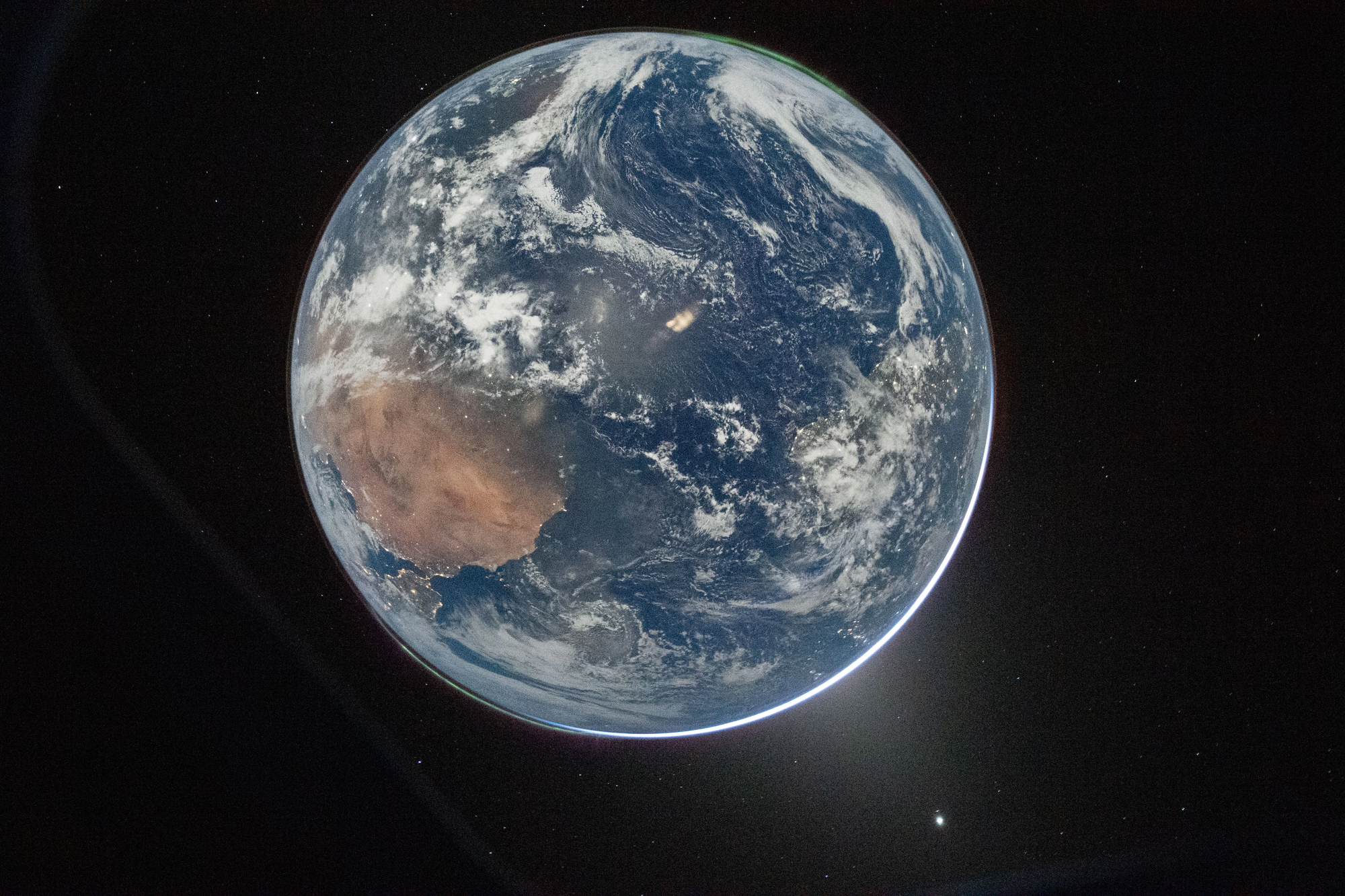
- The whole Artemis II mission happened in the first two weeks of April, and now NASA has a lovely gallery up. Like the 1960s missions, it feels like a miracle that this lunar flyby even happened. [NASA]
- For very different reasons this time. We've got the technology, we've just also got an actively anti-science doofus of a party in control of the budget, which they've slashed almost in half. "There are two things: the astonishing lack of transparency and the abject refusal to acknowledge political reality," said Casey Dreier, chief of space policy at The Planetary Society. "This is the least transparent NASA budget request I've ever seen — and I've literally looked through every single one since 1960." [Space.com]
- In case you're interested in more about Iranian artistic culture, or at least getting a quick primer, the V&A Museum has condensed its 5000 years of history into 15 objects. [V&A]
- And here, the Grey Art Gallery of NYU has compiled a more contemporary collection of Iranian artists, which comprise a stunning 1/5th of the gallery's entire collection. [Grey Art Gallery]
- We see what we imagine, and we imagine what we see. The ventral temporal cortex, a part of the brain involved in identifying and categorizing visual stimuli, also activates when we're asked to imagine things. So perhaps if you feed yourself beautiful images of the world, it will be easier to imagine a beautiful world? [Nautilus]
✨enjoy these culture notes
I don't know if Project Hail Mary requires recommending, considering it's one of the most popular movies in America and on-track to be the highest grossing hard sci-fi film of all time, but I watched it this week and I loved it.
I read the book a couple of years ago and loved that too. A lot of the more descriptive stuff I enjoy nerding out about – for instance, what alternate forms of life would look like based, how math or language would be the same or different – didn't make it into the film.
I mean, I get why. I think one of the reasons it's so popular is that it essentially pares down a lot of theoretical anthropology and physics into a feel-good story of two buddies working to solve problems. I'm sure it really would've dragged if the problems weren't continually being solved in a montage. I'm just saying that if you like that stuff and haven't read the book yet, it's worth picking up.
Perhaps because I've been thinking about the subject of this newsletter a lot, what really struck me in the movie was a line from world government project manager Eva Stratt's character. With the sun dimming, she calculates that a quarter of the population will die in thirty years from famine and starvation, and that's only if every nation gets together to ration food collectively. Since they won't, she matter-of-factly states, the death toll will more likely be around 50%.
But despite that dim view of what humanity will do, she pushes through this long-shot attempt at saving it anyway.
🗨️a final quote
To settle on a politics of love is not to deny that the world can be a scary place. It is to decide that the way to make it better is to love one another rather than to kill one another. Solidarity does not arise because nobody is rude, selfish, angry, or annoying. It arises out of the understanding that we are all that way. The fact that people have bad qualities does not have to mean that our entire orientation towards life must be guided by those qualities. It can mean instead that we adopt the opposite qualities, and watch the force of the good unravel the bad.
-- Hamilton Nolan, Two Visions.
Stalk me on Social Media
Instagram | TikTok | LinkedIN | Twitter | Goodreads | Spotify