3.27 | ghosts of a green new york past
Tugwell’s proposed Master Plan was a masterpiece of "Big Urbanism, where neighborhoods functioned as self-sustaining “small cities," commutes were short, and public park space would nearly triple in area.

✉️ letter #79
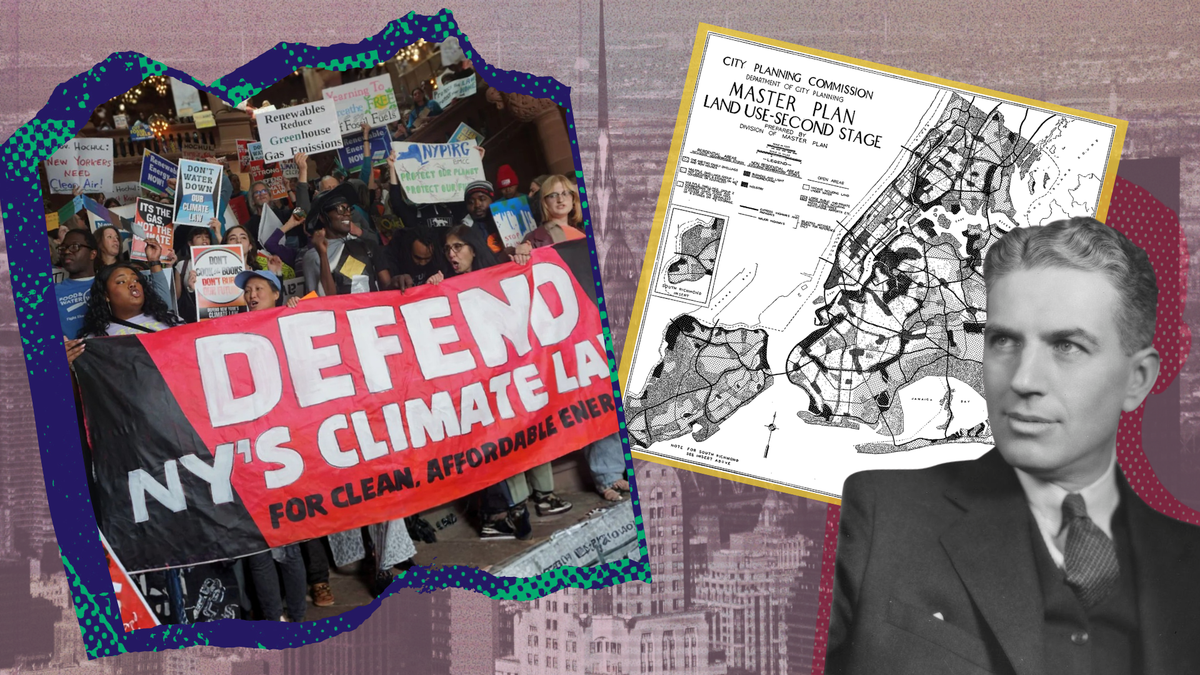
Imagine what a New York City that isn't vivisected by wide expanses of grey highways, but instead softened by the interspersed undulations of abundant communal greenery, could look like. It might have been ours. In the early 1940s, Rexford Tugwell—an economist of FDR’s "Brain Trust"—envisioned this city as one that combined bold urban renewal with granular citizen control. His plan was built on both dreams of a democratic force that could overcome the “contradictory, directionless competition” of capitalists, but also actual research on and testimony of how New Yorkers wanted to live.
Tugwell’s proposed Master Plan was a masterpiece of "Big Urbanism." It imagined neighborhoods functioning as self-sustaining “small cities” of their own where commutes were short and public park space would nearly triple in area. This green utopic ideal found a vociferous opponent in Robert Moses.
🎼 the soundtrack | blame - gabriels
For this week, a modern tune that sounds like echoes of the past
Moses, the "Master Builder" who viewed the city as a map to be conquered, successfully framed Tugwell’s vision as an aesthetic indulgence of the elite. In a scathing offensive, Moses wrote that "actual accomplishments... were brought about by people who labored day and night for limited objectives," not by "itinerant carpet bag experts splashing a ten-league canvas with brushes of comet’s hair."
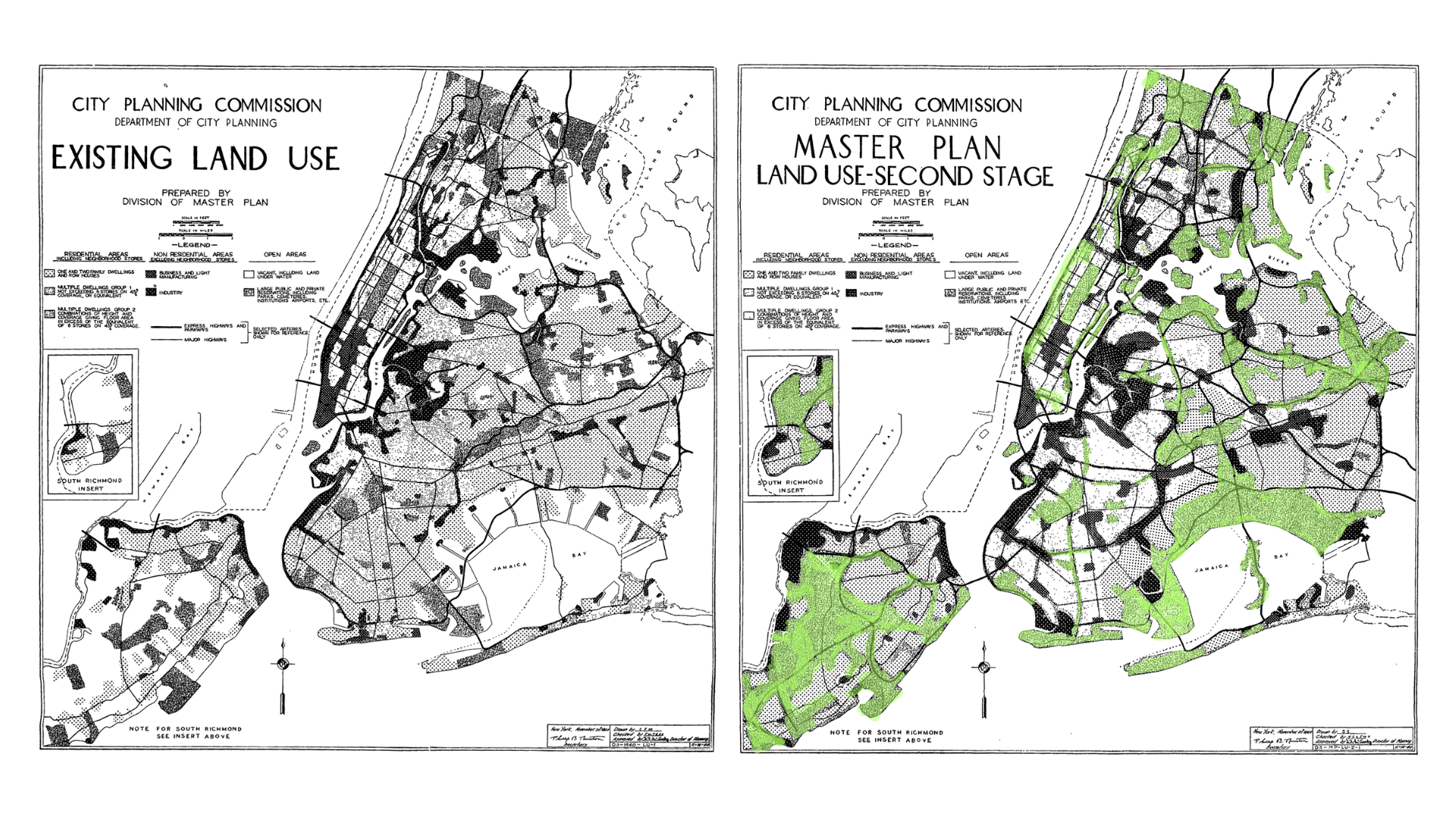
By branding the "Greenbelt" city as a frivolous academic dream that lacked "monetary sense," Moses poisoned the well. He advised Tugwell to "file... and forget it," warning that "the city won’t stand for it." Moses won. Even the progressive Mayor Fiorello La Guardia found the plan too politically toxic to touch. Tugwell was ushered out in 1941, leaving the gates open for the highways that turned vibrant neighborhoods into heat islands and relegated the underserved to the shadows of overpasses.
Reflecting on his unceremonious exit, Tugwell wrote in his diary that New York’s real estate interests were "as self-centered and as effectively obstinate a group of reactionaries as can ever have existed anywhere." He noted that Moses had become "a kind of hero to the exploitative interests" by discrediting comprehensive planning as "long-haired" and unrealistic… even as Moses was comprehensively making his own plans.
Moses famously quipped, "You can't make an omelet without breaking eggs," a phrase that positioned his destructive infrastructure as an inevitable, "practical" necessity. We have spent sixty years trying to reverse the damage of his "common sense."
Today, we are witnessing this same shadow-play on a state level, and the target this time is the Climate Leadership & Community Protection Act (CLCPA)—the landmark legislation designed to transition New York toward a zero-emission economy anchored in climate justice.
There is no single megalomaniac smearing that vision this time — save perhaps for a specific shadow in the White House obsessed with New York’s trajectory — but the mechanism of delay is identical. The law’s opponents have christened themselves the "Coalition for Safe and Reliable Energy." A brief dig into the filing names reveals the same "reactionary" interests Tugwell warned about; the group is led by figures like Donna DeCarolis, previously president of one of the state's largest natural gas companies. They are using the Moses Playbook: blaming electrification mandates for "skyrocketing" rates and housing costs, while ignoring the fact that sticking with fossil fuels in this increasingly volatile market is its own house of cards. They are trying to convince us, once again, that a livable future is a "long-haired" fantasy we cannot afford.
And Governor Hochul has been wavering, recently suggesting that the 2030 and 2050 standards may need to be "adjusted" to “protect consumers.”
But unlike in 1941, we live in an era where a political pivot can be researched with a search bar, and pushback from citizenry can be quickly united and organized against these barely-hiding corporate lobbyists. Hundreds of environmental advocates protested in Albany this week, chanting “gaslighting governor” outside of Hochul's office over how much of her backpedaling seems to be coming from a “backroom budget deal.”
My cohort at Columbia Climate School will be submitting our own formal comment soon, calling into question the Coalition’s misleading arguments and suspect math. We could always use more voices in the fray. One of the things that everyone in New York can do is find their state senator and assembly person, and tell them that you oppose any attempts to roll back the CLCPA.
There will always be “self-centered” and “effectively obstinate” interest groups that care more about control and their own profits than clean, healthy, equitable futures for all of us. We don’t need that side to continue breaking eggs for another 60 years.
🪢related threads
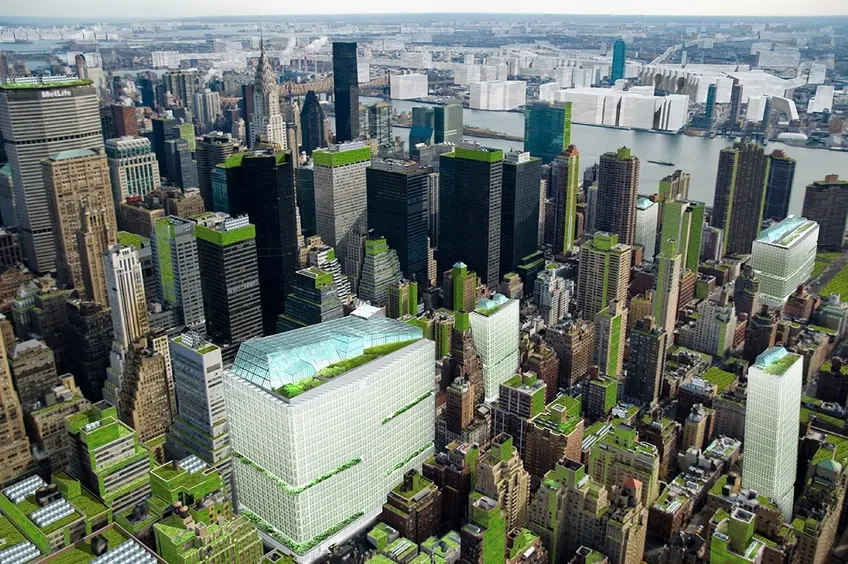
- A more recent green master plan of New York's future, New York City (Steady) State sought to answer the question: can New York City become self-sufficient within its political boundaries? It's main organizer, Michael Sorkin, has sadly passed away, but the archives are still worth a wander through. [Terreform]
- Also very cool: Urban Layers, a map that lets you "navigate through historical fragments of [Manhattan] that have been preserved and are currently embedded in its densely built environment. You use sliders to identify the borough's oldest buildings and explore the distribution of building activity over the last decades. [Urban Layers]
- Even as wind turbine companies take Trump's money to pull out of New York, investors in clean energy are beginning to fight the Republicans trying to doom us to a fossil fuel future... starting with Texas. [New York Times]
- One last addendum: Rexford Tugwell truly was a guy who was ahead of his time. Before trying to bring a green plan to New York, he was responsible for hiring the photographers that captured our most endearing images of the Dust Bowl, to promote the New Deal Resettlement Program. During that era, he was also one of the most prominent government voices for ensuring the welfare of minorities in receiving federal aide. He served as the last appointed American Governor of Puerto Rico (1941-1946), basically because he supported the island's path towards electing its own leaders and transitioned it from a colonial sugar economy to an industrialized self-governing territory.
✨enjoy these culture notes
Speaking of potential green paths not taken, The White House Effect (which aired at last year's Climate Film Festival) is a haunting must-watch and, luckily, it's streaming on Netflix.
Constructed entirely from archival footage, the film is a masterclass in the same narrative sabotage that derailed Tugwell. It transports us back to 1988, when George H.W. Bush campaigned as the "environmental candidate," promising to counter the greenhouse effect with the "White House effect." Imagine that.
Then lo came the war engines of the fossil fuel lobby and Chief of Staff John Sununu's systematic dismantling of a bipartisan climate consensus. By the 1992 Rio Earth Summit, the vision of global emission limits was gutted by the same "it’s not practical" rhetoric we hear today in Albany. It’s a sobering reminder of the cost of "filing and forgetting" a vision.
🗨️a final quote
You never change things by fighting the existing reality. To change something, build a new model that makes the existing model obsolete.
-- Buckminster Fuller
Stalk me on Social Media
Instagram | TikTok | LinkedIN | Twitter | Goodreads | Spotify