02.06 | why does "using our voices" feel so tiring?
It often feels like we’ve been shouting so much our throats are getting hoarse. We balk at the thought of another post, another meeting, or another protest. Yet, staying quiet consumes us with guilt. We spiral into depression.

✉️ letter #74
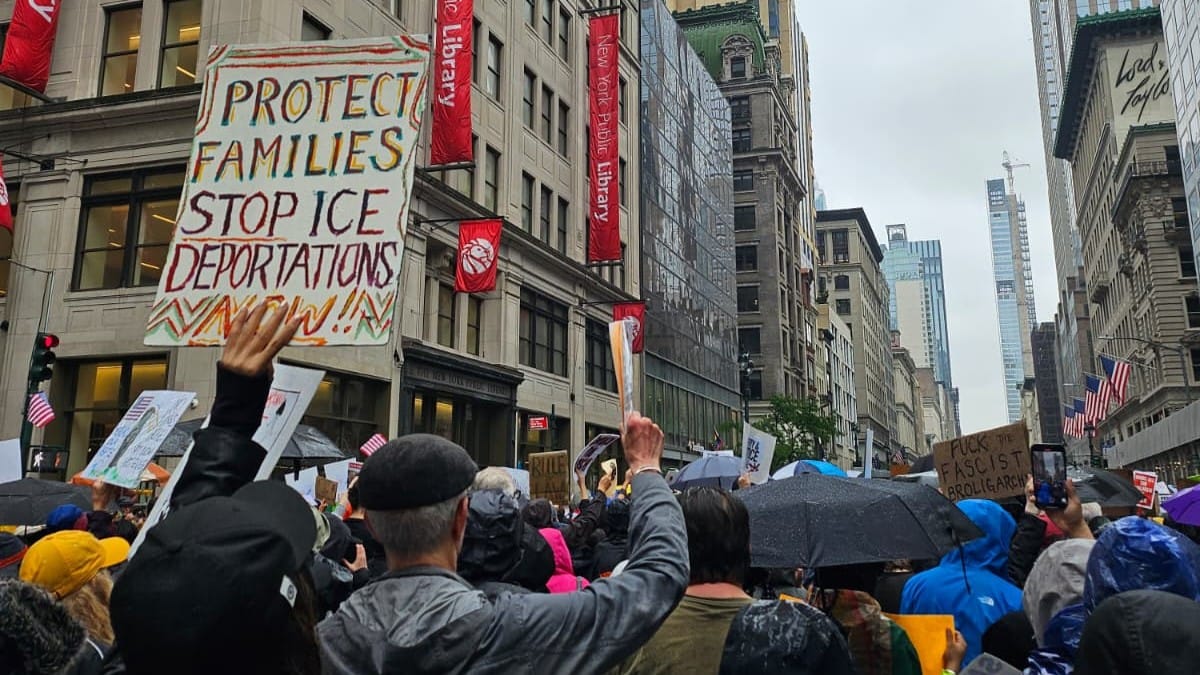
Tell me if this sounds familiar: there are more places to "use our voice" than ever—social media, town halls, on the streets. Ostensibly this is a win for democracy, but it often feels like we’ve been shouting so much our throats are getting hoarse. We balk at the thought of another post, another meeting, or another protest. Yet, staying quiet consumes us with guilt. We spiral into depression.
🎼 the soundtrack | The Happy Dictator - Gorillaz (feat. Sparks)
Returning to a Master’s program for "thorny world issues" is great because occasionally you stumble across the exact vocabulary you need that is relevant to an exact moment. This week, I came across Muhammed Ramazan Demirci’s research on “Civic Fatigue," which looks at how the modern push for constant participation can paradoxically lead to political exhaustion and democratic erosion.
Demirci notes that while we assume “more participation equals more legitimacy,” when that feedback doesn't lead to real change, it creates an “invisible crisis” of distrust. Two of his examples really vibed with me:
- Social Media: Participation is often reduced to "spectacularized" reactions—likes and shares—where rapid, wildly varied agenda cycles produce "emotional depletion" and a sense of meaninglessness.
I see "chronically online" debates about when people should make their feeds support specific causes, and honestly, I see both sides. Even though I don’t shy away from stating positions, my Instagram is nowhere near a political billboard—and sometimes I feel guilty for not “doing more.” I am not alone. Demirci points to researcher Byung-Chul Han’s idea of the “burnout society,” where we internalize the duty to participate as an exhausting ethical obligation. It turns out that's no good for anybody. - Higher Education: How endless surveys and self-assessment forms and course evaluations basically end up looking like routine formalities, especially when they can’t get you out of participating in mandatory university modules that are probably verifiably useless.
I’m right now in the midst of completing probably the third DEI/Title VII digital training course I’ve been pushed into since joining Columbia. While I recognize the value of everyone being on the same page about these obviously incredibly important topics, I can’t help but feel like the whole way these courses are foisted on us feels like a farce. In my last one, I got a Cultural Communications completion certificate even though 80% of my essay box answers were “I'm not answering this, this is stupid.” This one, on Anti-Harassment policies, I’m letting run in the background as I complete other work
It brings to mind another concept I learned about recently: “Sludge” in customer service, aka those automated loops designed to make you give up on your issue. Sludge happens because performance goals are set to reduce customer payouts, not increase customer satisfaction. And what you, as the customer, get is the same feeling: you need energy to fight bureaucracy until the end of time, lest it defeats you. You are too often defeated. Sometimes the only move is to stop participating—either by tossing the junk you bought (what they want) or refusing to buy from them again.
Demirci calls this “critical withdrawal”—viewing non-participation as “passive resistance” rather than just being lazy or apathetic. I want to emphasize that I don’t actually want all of us to “passively resist” the instrumentalized systems that are causing us to withdraw. And I don’t think Demirci wants that either - rather, he’s telling us that when our actions towards certain outcomes seems to feel meaningless, we need a clear-eyed view of the power structures at play and rethink the actions to take. Is there something better you can do than a social share? Can you find out why an organization is forcing you to complete meaningless paperwork? Can you financially hurt the company that Sludged you?
But also, I think, he’s telling us to not make the mistake of attacking the person who’s withdrawn from your cause. Because then, you become a part of the very system that causes that fatigue.
🪢related threads
- The original article where the concept of "Sludge" got applied to customer service, and one man's battle to dig into how we fell into this nightmare. [The Atlantic]
- Demirci's study focused on offered participatory avenues, which did not tacitly include the kind of formalized street protests we've been having (and that I've participated in) in New York. Turns out there's a study that looks at the effectiveness too, including what types (nonviolent, disruptive etc.) are effective for what kind of situations [Science Direct]
- I'm keeping tabs on the effect of protests in real time for what's happening re: Minnesota and ICE's blatant abuses in this country. At least one poll has found that 65% of people now think they've gone too far, compared to 54% last June. [PBS]
- And, while we're on this protest research beat, there was a recent study about what impact all this climate change activism has had, considering we're still barrelling towards 3C even after what feels like decades of shouting. Since it has been usually pretty normative and nonviolent, we seem to have changed public perception on its importance, but not enough policy. [Yale]
✨enjoying: a piece of pop culture fun
I know I'm kind of late to the game, but Ryan Coogler's Sinners was great! I'm in the midst of watching as many Academy Award nominees as I can, and it's lucky this was included in my HBO Max subscription.
Like, talk about people living under impossible circumstances: Black people just trying to enjoy life in Jim Crow-era Mississippi, and going up against the supernatural along with the racists.
🗨️a final quote
There is no such thing as a single-issue struggle because we do not live single-issue lives
-- Audre Lorde
Stalk me on Social Media
Instagram | TikTok | LinkedIN | Twitter | Goodreads | Spotify